
The Big Four Habits: How Everyday Choices Can Help Build a Greener Kenya
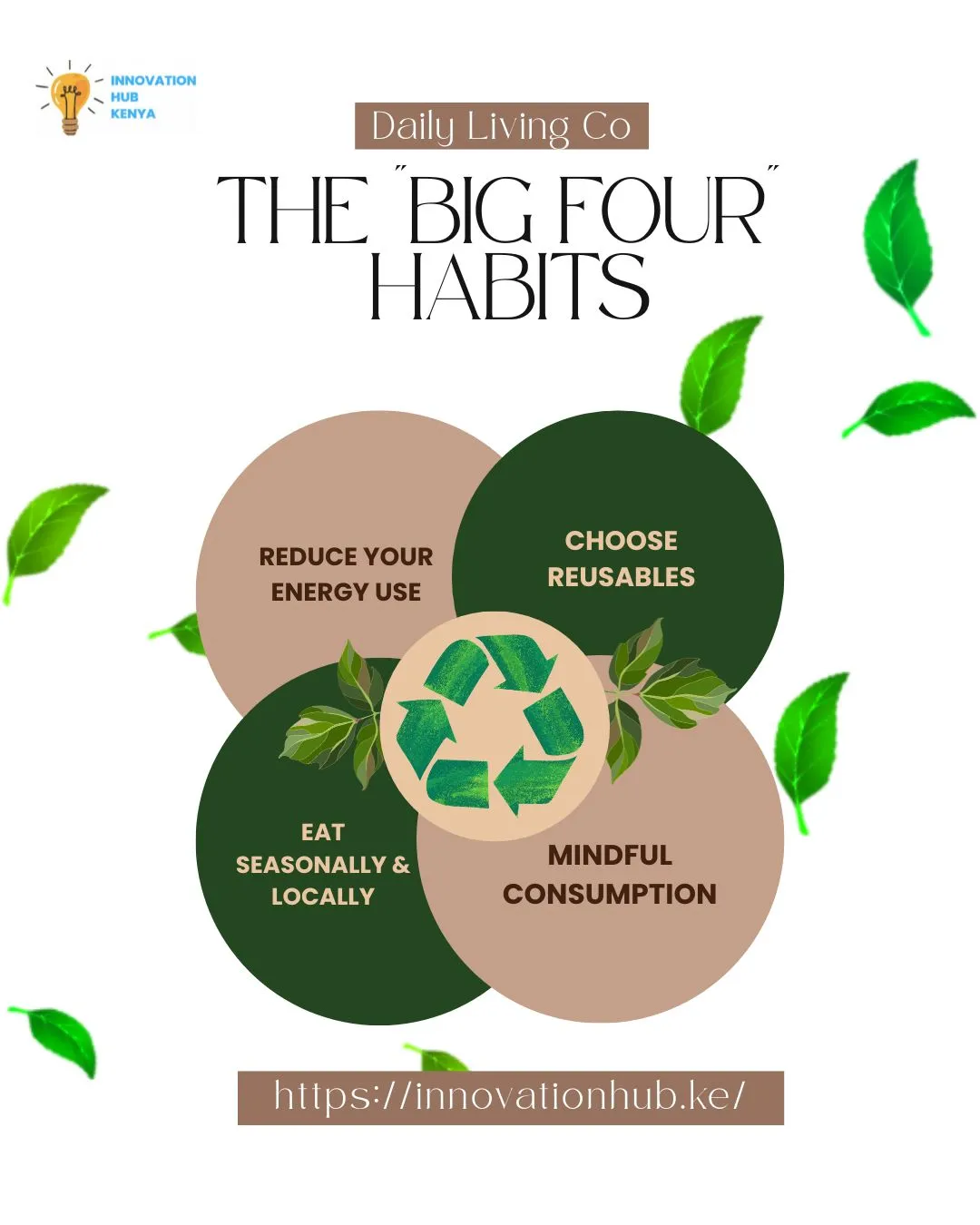
The Big Four Habits: How Everyday Choices Can Help Build a Greener Kenya
Every day begins with simple routines. We switch on the lights, prepare breakfast, buy groceries, commute to work, and throw away packaging without giving it much thought. These actions feel small and insignificant.
But when multiplied across millions of households in Kenya, they shape the future of our environment.
Kenya generates thousands of tonnes of waste every day, much of which ends up in open dumpsites, rivers, drainage systems, and public spaces. During heavy rains, blocked drainage channels contribute to flooding in many urban areas, while improperly managed waste pollutes water sources and threatens both wildlife and public health.
One of the country's most well-known examples is Nairobi's Dandora dumpsite, where waste continues to accumulate despite ongoing efforts to improve waste management. For thousands of waste pickers, the site provides a livelihood through collecting recyclable materials, but it also exposes them to hazardous conditions and environmental pollution.
These challenges may seem overwhelming, but meaningful change does not always begin with large-scale projects. It starts with everyday decisions made by individuals, families, schools, and communities.
- Reduce Your Energy Use
Electricity powers our homes, schools, and businesses, but conserving energy also helps protect the environment. Turning off lights when leaving a room, unplugging unused electronics, using energy-efficient appliances, and making better use of natural daylight all reduce unnecessary energy consumption.
These small actions lower electricity bills while helping reduce greenhouse gas emissions associated with energy production.
- Choose Reusable Products
Kenya has made significant progress in reducing plastic pollution, including the introduction of measures to limit single-use plastic bags. However, disposable plastics such as bottles, food containers, cups, and packaging remain common in daily life.
Replacing single-use items with reusable shopping bags, refillable water bottles, lunch containers, and coffee cups helps reduce the amount of waste reaching landfills and waterways.
Every reusable item chosen today is one less disposable item entering the environment tomorrow.
- Eat Seasonally and Support Local Farmers
Choosing locally grown, seasonal produce benefits both the environment and local communities.
Food transported over long distances requires more fuel and packaging. Buying from local farmers reduces transportation emissions while strengthening local economies.
Planning meals carefully and purchasing only what is needed also helps reduce food waste—a growing environmental and economic challenge. Less food wasted means fewer resources such as water, energy, and land are used unnecessarily.
- Practice Mindful Consumption
Before making a purchase, pause and ask yourself:
"Do I really need this?"
Mindful consumption means buying quality products that last longer, repairing items instead of replacing them whenever possible, and avoiding unnecessary purchases.
By consuming more responsibly, we reduce waste, conserve natural resources, and save money.
Small Habits Create Lasting Change
Environmental sustainability is often viewed as something that requires major investments or government policies. While these are important, lasting change also depends on the daily choices made by ordinary people.
Imagine if every household in Kenya reduced energy waste, carried reusable shopping bags, supported local farmers, and bought only what they truly needed.
The combined impact would mean:
Less waste reaching dumpsites and rivers. Cleaner neighbourhoods and public spaces. Lower household expenses through reduced energy use and smarter purchasing. Stronger support for local businesses and farmers. A healthier environment for future generations.
No one person can solve Kenya's environmental challenges alone.
But together, millions of small actions can create extraordinary change.
The journey towards a greener Kenya begins with four simple habits—and the decision to start today.